
EUROSCRIPT.CO.UK
  • HOME
  • HIRE A WRITER
  • FEEDBACK
    • SCRIPT DEVELOPMENT WORKSHOPS
    • FEEDBACK
    • One-hour chat
    • Feedback for Partners
  • EVENTS
  • CALENDAR
    • HOW TO WRITE A WINNING TREATMENT
    • TRUE STORIES INCUBATOR - by invitation only
    • HOW TO CLAIM THE UK INDEPENDENT FILM TAX CREDIT
  • RESOURCES
    • VOUCHERS
    • SCREENWRITING FAQS
    • HOW TO WRITE A WINNING TREATMENT
    • ONLINE CLASSROOM
    • SCREENWRITING ARTICLES
    • SCRIPT FORMATS AND FREE DOWNLOADS
    • DEVELOPING YOUR SCREENWRITING CAREER
    • SCREENWRITING LINKS
  • COMPETITION
    • ENTER HERE
    • WINNERS 2025
    • INTERVIEW WITH A WINNER
    • PREVIOUS WINNERS
    • THE EUROSCRIPT TREATMENT BAROMETER REPORT
  • ABOUT
    • OUR BOARD
    • DISCOUNT INFO
    • OUR PARTNERS
    • SUCCESS STORIES
    • JOIN OUR MAILING LIST
    • TERMS & CONDITIONS
    • PRIVACY POLICY
    • CONTACT US
  • BLOG
  • THE SCRIPT CLINIC

The X Factor draft: this edit could be the most important of all

28/6/2017

5 Comments

 
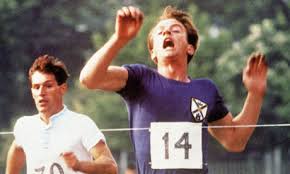
Chariots of Fire - Charles Harris - Your Next Script - the X Factor
Your Next Script #11

By Charles Harris

We're almost there. Over the last ten articles we've developed an idea, worked it up as a treatment, written a first draft and revised it to the point when it's almost ready to send out.

But there are two more crucial tasks yet to perform. And the first will often make the most dramatic difference of all.

What have you been putting off?

This is what I call the X factor. Nothing to do with reality TV, the X factor is both simple yet profound. But only you know what that is. 

It could be something you've been meaning to cut - such as a sequence or character you love but which you know isn't working.

It could be something you know you need to add.

It could be some aspect of the script that you're starting to have doubts about. Perhaps the key turning point doesn't do the job as well as it should. Or the premise doesn't totally make sense. 

It's the thing you've been putting off doing - draft after draft.


Young Sherlock - Charles Harris - Your Next Script - the X Factor
The difference between OK and great

Listen to the small inner voice that prompts a rethink or addition. 

Most good writing comes from our unconscious minds. While we need to use our rational editing brain to polish it up, we also have to listen to those deeper instincts.

It's natural to be afraid of the amount of work needed. But that extra work may turn out to be the most important work of all.

If in doubt...

What may seem a trivial change at this stage may even have profound effects. The big difference between a script that's so-so and one that sparkles is often this stage. It's now that the writers who go the extra mile reap their rewards.

Kill your darlings

In this draft you examine everything you are clutching onto in your script.

All too often, at this stage, we find we're still holding onto the very things that we should be letting go.

Be brutally honest with yourself - because if you're not I can guarantee that the industry will be.

You only get one chance with each possible buyer - producer or agent. Once they've rejected your screenplay, they are very unlikely to look at it again.

If in doubt, cut it out

So if you have doubts about anything, cut out the scissors. Cut it out and see what happens. (Remember you can always put it back again... But you almost certainly won't).

If in doubt, put it in

The corollary to cutting what you are thinking of cutting, is to write what you've been avoiding writing.

What about that twist that you keep mulling over and putting off because it would involve some extra research?

Or the character change that you can't put out of your head, but means rethinking the entire second act?

Or maybe there's a seemingly trivial issue that you just can't put out of your mind.

What are you shying away from?

Changes I've made in this final mini-draft have always brought major improvements.

Whether it's writing an emotional crisis that I've been shying away from, because it will be too gruelling (or challenging) to write or rectifying what seems to be a relatively trivial plot hole, I never regret this last run through.

One script of mine came to life in a totally unexpected way, simply because I followed the little voice that told me I had to dramatise a flashback from a character's childhood in Jamaica. 
Even though I thought I was being stupid - we'd never afford the budget for a location shoot in the Caribbean - I wrote the scene. And it worked.

Despite my fears, we shot it, for almost no money, on a gloriously sunny day by turning a gravel pits in Hertfordshire into a totally convincing country road near Kingston, Jamaica, and it gives a very special lift to the whole film.

Listen to your instincts

To sum up: you may think that all the writing is over. But you can be sure that there are a few little loose ends still to be investigated.

Now, for one final time, you will gain enormously from listening to your instincts and making those last few changes that make all the difference to your script.

We're almost done. One more job to do before we can send it out - which we'll look at in the final article of this series.


Charles Harris is an international award-winning writer-director and best-selling author. His new novel - The Breaking of Liam Glass - is to be published by Marble City tomorrow. ​

​<previous                                                                                                         next>

5 Comments
marc
30/3/2018 03:39:32 am

I've enjoyed your series of articles, could you tell when the last article will be published?

Thank you
Marc

Reply
Charles Harris link
3/4/2018 04:44:37 pm

Hi Marc

I'm very pleased you've enjoyed this series. #12 was indeed published last June but seems to have disappeared. I blame the Internet gods. I'll get it back up as soon as I possibly can.

Watch the skies - or at least this space.

Best wishes
Charles Harris

Reply
Charles Harris link
5/4/2018 05:27:10 pm

Hi Marc

I'm pleased to tell you that the final part of the series is now back up on the site - you can find it here:

http://www.euroscript.co.uk/blog/the-final-final-draft-12-of-your-next-script

I hope you like it as much as the rest.

Best wishes
Charles

Reply
Sains Data link
21/6/2025 05:42:11 am

What are some examples of things you might be putting off in your writing, according to the passage?

Reply
Charles Harris link
23/6/2025 10:02:51 am

Thank you, good question.

As I say in the article, it could be almost anything:

It could be something you've been meaning to cut - such as a sequence or character you love but which you know isn't working.

It could be something you know you need to add.

It could be some aspect of the script that you're starting to have doubts about. Perhaps the key turning point doesn't do the job as well as it should. Or the premise doesn't totally make sense.

It's the thing you've been putting off doing - draft after draft.

To give some specific examples:

I've often created a character that I loved, but who wasn't advancing the story. Sometimes you have to be ruthless with these people who are just getting in the way, however much fun they might be.

Or it could be a whole sequence.

In my crime satire novel 'The Breaking of Liam Glass', Jason, the journalist 'hero' (or more like anti-hero), desperately needs to watch a VHS tape he's acquired, containing vital evidence, but of course nobody has VHS any more.

I wrote a fun chapter where he chases up and down Kilburn High Road, going into every odds and ends phone or computer shop in the hope of finding one, but gets nowhere, Finally, he finds a porn shop in town that still runs VHS for its customers; and asks for help - with some embarrassment.

When I re-read the draft, the high road chapter, fun as it was, just held up the story, so I cut it and went straight to the porn shop, which was much more interesting a jump.

Conversely, in my psychological mystery 'Room Fifteen', the central character is a detective with amnesia, who thinks someone is trying to murder him before he gets his memory back.

Going over early drafts, I realised I needed to give the reader more hints about what he might have forgotten. This had to be threaded in with great care, chapter by chapter, to avoid any spoilers. I put off doing it for a number of drafts, afraid that I wasn't up to the job, but finally got stuck in, and it worked excellently.

Every script is different. Only you know what it is that you're ducking doing. It takes great honesty to face that, but that's what makes a good writer.

I hope this helps

Charles

Reply


Leave a Reply.

    RSS Feed

    BLOG

    THE ONLY PLACE TO TALK ABOUT THE CRAFT OF SCRIPTWRITING.

    Archives

    September 2025
    May 2025
    March 2025
    February 2025
    August 2024
    January 2024
    November 2023
    April 2023
    October 2022
    February 2022
    March 2021
    February 2021
    January 2021
    May 2019
    April 2019
    February 2019
    January 2019
    November 2018
    August 2018
    May 2018
    April 2018
    January 2018
    October 2017
    July 2017
    June 2017
    April 2017
    February 2017
    January 2017
    December 2016
    November 2016
    October 2016
    September 2016
    June 2016
    May 2016
    April 2016
    March 2016
    February 2016
    January 2016
    December 2015
    November 2015
    October 2015
    September 2015
    August 2015
    April 2015
    March 2015
    February 2015
    January 2015
    October 2014
    September 2014
    May 2014
    April 2014
    February 2014
    January 2014
    December 2013


    CATEGORIES

    All
    Beginning
    Character
    Competitions
    Conspiracy Theory
    Descriptions
    Dialogue
    Editing
    Emotion
    First Draft
    Genre
    Horror
    Mental Game
    Money
    Pitch
    Premise
    Protagonist
    Rocketry
    Scenes
    Science Fiction
    Screenplay Structure
    Screenwriting Technique
    Script Reading
    Second Draft
    Tips
    Treatments
    Werner Von Braun
    Your Next Script

    RSS Feed

Picture
CLICK HERE TO JOIN OUR SCREENWRITING COMMUNITY
Privacy Policy © Euroscript Limited 2020
  • HOME
  • HIRE A WRITER
  • FEEDBACK
    • SCRIPT DEVELOPMENT WORKSHOPS
    • FEEDBACK
    • One-hour chat
    • Feedback for Partners
  • EVENTS
  • CALENDAR
    • HOW TO WRITE A WINNING TREATMENT
    • TRUE STORIES INCUBATOR - by invitation only
    • HOW TO CLAIM THE UK INDEPENDENT FILM TAX CREDIT
  • RESOURCES
    • VOUCHERS
    • SCREENWRITING FAQS
    • HOW TO WRITE A WINNING TREATMENT
    • ONLINE CLASSROOM
    • SCREENWRITING ARTICLES
    • SCRIPT FORMATS AND FREE DOWNLOADS
    • DEVELOPING YOUR SCREENWRITING CAREER
    • SCREENWRITING LINKS
  • COMPETITION
    • ENTER HERE
    • WINNERS 2025
    • INTERVIEW WITH A WINNER
    • PREVIOUS WINNERS
    • THE EUROSCRIPT TREATMENT BAROMETER REPORT
  • ABOUT
    • OUR BOARD
    • DISCOUNT INFO
    • OUR PARTNERS
    • SUCCESS STORIES
    • JOIN OUR MAILING LIST
    • TERMS & CONDITIONS
    • PRIVACY POLICY
    • CONTACT US
  • BLOG
  • THE SCRIPT CLINIC