EUROSCRIPT.CO.UK
  • HOME
  • HIRE A WRITER
  • FEEDBACK
    • SCRIPT DEVELOPMENT WORKSHOPS
    • FEEDBACK
    • One-hour chat
    • Feedback for Partners
  • EVENTS
  • CALENDAR
    • HOW TO WRITE A WINNING TREATMENT
    • TRUE STORIES INCUBATOR - by invitation only
    • HOW TO CLAIM THE UK INDEPENDENT FILM TAX CREDIT
  • RESOURCES
    • VOUCHERS
    • SCREENWRITING FAQS
    • HOW TO WRITE A WINNING TREATMENT
    • ONLINE CLASSROOM
    • SCREENWRITING ARTICLES
    • SCRIPT FORMATS AND FREE DOWNLOADS
    • DEVELOPING YOUR SCREENWRITING CAREER
    • SCREENWRITING LINKS
  • COMPETITION
    • ENTER HERE
    • WINNERS 2025
    • INTERVIEW WITH A WINNER
    • PREVIOUS WINNERS
    • THE EUROSCRIPT TREATMENT BAROMETER REPORT
  • ABOUT
    • OUR BOARD
    • DISCOUNT INFO
    • OUR PARTNERS
    • SUCCESS STORIES
    • JOIN OUR MAILING LIST
    • TERMS & CONDITIONS
    • PRIVACY POLICY
    • CONTACT US
  • BLOG
  • THE SCRIPT CLINIC

Beating the gatekeepers with webseries: how 3 filmmakers did it

25/2/2021

1 Comment

 
By Alizée Musson

In the pre-internet age, filmmakers’ options for getting a foot in the door were limited to writing spec scripts and shooting short films for the festival circuit. Back then, reaching an audience was impossible without convincing the industry’s gatekeepers first. Nowadays, in the world of Web 2.0, reaching a worldwide audience is only a click away. Through their web series’, the following three projects gathered enough momentum to launch their creators’ big break.

So, what can we learn from these success stories that may inspire you to jump on the web series bandwagon?

1. Simon's cat
Picture
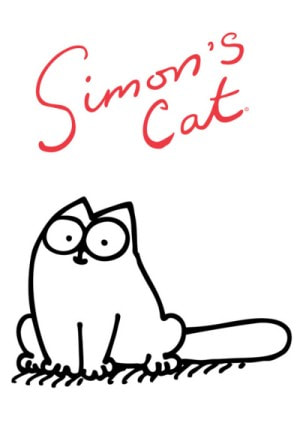
The internet loves cats; it’s a well-known fact. Back in 2008, Simon Tofield, an animator, decided to teach himself computer animation by making a short film. Inspired by one of his four cats, Hugh, the film focused on a cat trying to get his owner’s attention in the morning. A simple idea that carried Tofield far. Without knowing it at the time, someone copied the film from his showreel and uploaded it to YouTube. By the time he realised, the video had captivated more than cat lovers around the world. Seeing the video’s popularity, Tofield decided to launch a YouTube channel to tell more of his buddies’ daily adventures -  Simon’s Cat was born!

​Hundreds of episodes have been made since, viewed around 1 billion times on a YouTube channel with 5.5M followers. From working alone behind his computer, Tofield became a director leading a team of animators. Simon’s Cat became so viral that in 2009, a book adaptation was announced and went on to sell internationally.

​From then on, the web series and his feline protagonist evolved into various formats: in 2012, Simon’s Cat comic strips ran in The Daily Mirror; in 2016, Simon’s Cat partnered with Sesame Street; and in 2018 the game Simon’s Cat Dash came out. 

Tofield’s experience is a perfect example of how sharing your work on a platform such as YouTube could be a great way to test a concept – even one you haven’t thought of yet.

2. Shiro's Story

Picture
In 2018, rapper and filmmaker Andrew Onwubolu (a.k.a. Rapman) released the three-part web series Shiro’s Story on YouTube: the story of a father who must dive deep into the London gang world to get his daughter back; all told through freestyle rap. Inspired by a real-life story from the South London neighbourhood of Lewisham, where Rapman grew up, the film was shot “guerilla-style” with a small cast and crew. The trilogy was an instant hit, gathering millions of views within the first hours of being released.

Shiro’s Story didn’t just garner a wide audience, it also caught the attention of producers and broadcasters. Thanks to this web series, Rapman moved on to more significant projects. In 2020, he released a crime drama feature film, Blue Story, based on another YouTube series of the same name that he had released in 2014. The film was co-produced by Paramount Pictures and BBC Films and was short-listed for the BAFTAS. The web series’ success also led Rapman to get a representation deal with the entertainment agency Roc Nation.

The success of Shiro’s Story is definite proof that you don’t need fancy gear and a big budget to create a hit – all you need is a good story.

3. People Just Do Nothing

Picture
People Just Do Nothing follows the lives of MC Grindah, DJ Beats and his friends running a radio station called Kurupt FM, broadcasting drum and bass music from Brentford, London. Created by Allan Mustafa, Steve Stamp, Asim Chaudhry and Hugo Chegwi, this mockumentary sitcom was first released on YouTube in 2011 as five webisodes, accumulating around 380K views. Among the audience was producer Jon Petrie who worked with a former producer of The Office, Ash Atalla. Seeing potential in the idea, Atalla arranged to produce a pilot episode for BBC3’s Comedy Feeds in 2012. BBC3 liked the concept and decided to pick up the series. Its first season was released in 2014 and ran for five seasons until 2018.

In 2017 the show won a BAFTA award and a Royal Television Society award for Best Scripted Comedy. Although it is now over, the creators have been working on a feature film adaptation due to be released in August 2021: People Just Do Nothing: Big in Japan. The series’ success has also opened many doors for the creators: Allan Mustafa, Asim Chaudry and Hugo Chegwin have since respectively appeared in films and TV series, including Netflix’s Love Wedding Repeat, Wonder Woman 1984 and The Announcement, and Steve Stamp continues to write for TV, including the TV movie Peacock.

While this web series did not gather millions of views, its concept stood out enough to get picked up by a significant broadcaster. You don’t need many episodes. All you need is a strong story to get noticed. 

So, what are you waiting for?
​Ready, steady, write a web series!

If you’d like to learn more about the world of web series, we’re holding a webinar on the subject on Apr.7th (18.00-19.30) - CLICK HERE for more info.
1 Comment

WHY FEEDBACK IS YOUR BEST FRIEND

22/2/2021

2 Comments

 
THE FIVE PILLARS OF FEEDBACK
 
 
WHY
Every time I write something, I make the same mistake. “I’ve been a writer for a long time,” I think, “and finally, I know enough to write the final draft first.” I get to work, and produce my masterpiece. As a formality, I give it to a reader for feedback, expecting them to tell me it’s perfect. Instead, I receive an analysis of my work, pinpointing its weaknesses, and suggesting ways to improve it, all of which are suddenly obvious. “Of course!” I think. “Now, why didn’t I see all that?” 

The simple answer is that a reader of your work has a big advantage over you. It’s not that they’re smarter than you, or a better writer, it’s simply that they’re not you. No matter how objective we like to think we are about our work, we’re too invested to see it clearly. We need help.
 
WHO
Some people turn to their friends for feedback. Here’s a basic rule: if you want honest feedback on your work from your friends, you must be prepared to change one of two things – your work, or your friends. 

Exchanging feedback with a fellow writer may be a better option, and if you can form a mutually beneficial partnership with one, go for it. Writing groups can be better still, and some aspiring writers are surprised by how supportive they can be – but you’re all in the same boat, and what would be the point of trashing another writer’s work? 

Best of all, though, is getting feedback from an industry professional, whose only agenda is to help you do the best work you can. Why? Mainly because you’ll be paying them, and it’s in their interest to give you good value and useful feedback.
 
HOW
Don’t take feedback personally. If that seems like a surprising thing to say about your writing, which may feel like the most personal thing you’ve ever done, remember: it’s your work that’s being assessed, not you as a person. A good reader will be trying to help you move your work forward, and the process is a collaboration, not a lecture.

So, be positive. Treat every note you get as an opportunity to improve what you’re writing. If a reader highlights a weakness, don’t think of it as an error you need to correct; see it as a challenge: determine to not only fix what’s wrong, but to make it even better. I call this approach, “I’ll see you, and raise you,” and it can be exhilarating to see just how far you can take a reader’s note, and use it as the catalyst for transformation.
 
WHAT KIND
In general, there are two types of feedback: written, or in-person. You may find yourself in a position where the choice isn’t up to you; if, for example, a producer wants written "coverage" of your script in the form of a report that adheres to an industry template. But if you have a choice, think about what’s most useful to you. Written feedback gives you a formal assessment of your work by a reader, and the strengths and weaknesses of the draft you submitted to them. It provides a useful document that you can refer to when you’re writing your next draft. It can also be shown to other people (e.g., a producer, as mentioned).

Verbal feedback in person provides a more relaxed forum in which you can discuss your work and ideas with a script editor or consultant. It can be a very useful development tool, allowing you to think things through as you talk, and get a sense of where you should be going with your next draft. Cleary, both formats have their advantages, and if you have the choice, imagine what would help you most. You may find that you want to follow up a written assessment with a subsequent in-person conversation (with the reader who wrote the report, or a differ editor) or vice-versa.
 
WHEN
The best moment to get feedback is before you write anything. But in the absence of a time machine, get feedback when you’ve made your work as good as you can. The exception might be if you’re developing something with someone who’s monitoring your progress, but in general, wait until you’ve written what you think is your best draft. The reader’s job is to help you write a better one.

FOR DETAILS OF EUROSCRIPT'S FEEDBACK SERVICES CLICK HERE

2 Comments

EIGHT GREAT CONTAINED SCRIPTS

22/2/2021

0 Comments

 
Picture
As inspiration for the 4-evening workshop that starts on Thursday 7pm.

Only TWO places remaining!


Some of the most memorable films are set in just one or two locations. The self-imposed contained setting forces the writer to rely on character development to build tension and, as such, are excellent case studies in minimalism.

Here are eight of the best contained screenplays ever written that only take place in one (or a few) settings.

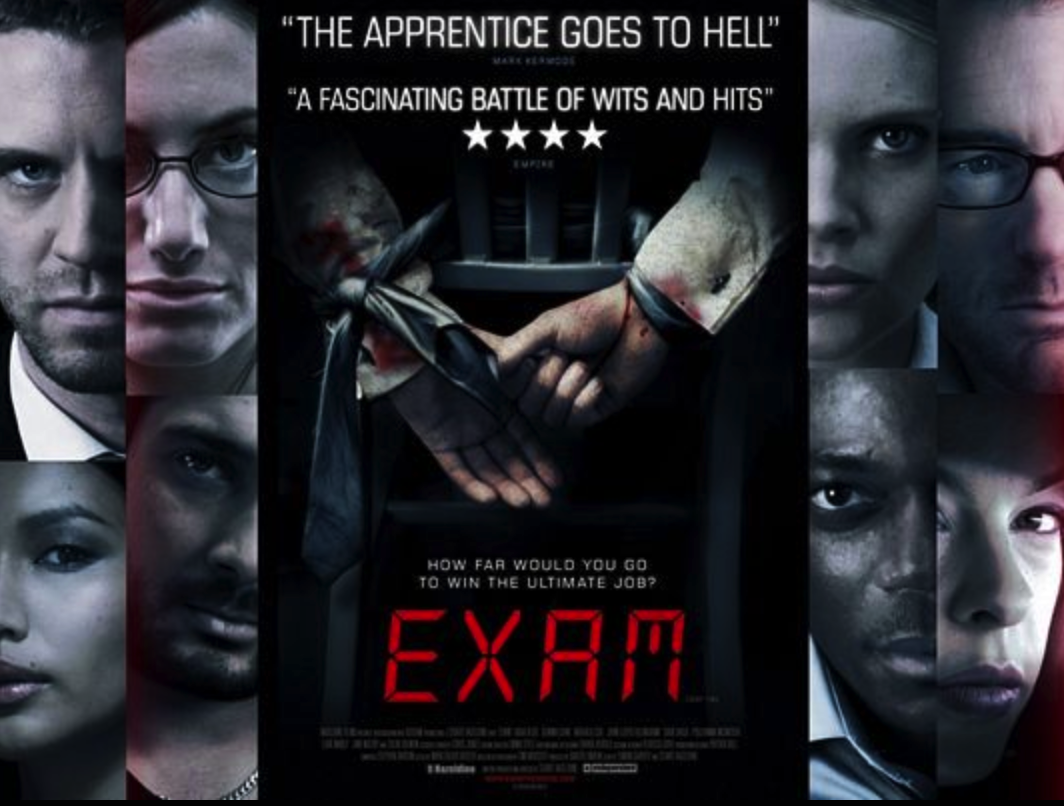
Some like EXAM produced for $600K remained true to their indie origins, some like PHONE BOOTH were studio films, others like BURIED, originally designed to be filmed on a micro-budget transcended their humble origins when a star became attached.

Regardless of their pathway these scripts all became successful films and are worth a read!

MARGIN CALL - On the eve of the 2008 financial meltdown a few hedge fund traders discover what is about to happen and have 24 hours to save themselves from the impending collapse.

PHONE BOOTH - A publicist finds himself trapped inside a phone booth, held captive by a sniper.

Funnily enough, Hitchcock originally wanted to make the movie in the late 60s but felt he couldn't do the concept justice from a technical standpoint.

THE INVITATION- A man accepts an invitation to a strange dinner party organised by his ex-wife which soon takes a turn for the worst.

BURIED - A truck driver in Iraq wakes up to discover he's been buried alive inside a coffin with only a lighter and a phone. ,

LOCKE - Set in a car over one night it tells the story of a construction engineer who must make the biggest decision of his life.

PANIC ROOM - A divorced woman and her diabetic daughter take refuge in their house's safe room when three criminals break in.

HARD CANDY - A teenager locks up a photographer inside his own house to force him to confess he abducts underage girls.

EXAM - Eight candidates for a desirable yet mysterious job are locked together in an exam room and given a final test.

All these scripts are a good reminder that personal conflict, emotion, flawed protagonists can be gripping no matter how limited the scope and setting of your script.

Give your protagonist a strong, universal goal and you have all the ingredients you need to write to write a compelling screenplay.

If you are interested in exploring your own idea and characters for a contained movie "Write the Contained Feature Film" starts on Thursday and there are only TWO PLACES left. Just like in the movies the more contained the workshop the better the experience in the Zoom world and, as such, places are limited!


4 x Thursday evening sessions:
February 25, March 4, 11, 18
7pm-9pm

Online workshop


Standard price: £198
Concession: £180
​
0 Comments

    RSS Feed

    BLOG

    THE ONLY PLACE TO TALK ABOUT THE CRAFT OF SCRIPTWRITING.

    Archives

    September 2025
    May 2025
    March 2025
    February 2025
    August 2024
    January 2024
    November 2023
    April 2023
    October 2022
    February 2022
    March 2021
    February 2021
    January 2021
    May 2019
    April 2019
    February 2019
    January 2019
    November 2018
    August 2018
    May 2018
    April 2018
    January 2018
    October 2017
    July 2017
    June 2017
    April 2017
    February 2017
    January 2017
    December 2016
    November 2016
    October 2016
    September 2016
    June 2016
    May 2016
    April 2016
    March 2016
    February 2016
    January 2016
    December 2015
    November 2015
    October 2015
    September 2015
    August 2015
    April 2015
    March 2015
    February 2015
    January 2015
    October 2014
    September 2014
    May 2014
    April 2014
    February 2014
    January 2014
    December 2013


    CATEGORIES

    All
    Beginning
    Character
    Competitions
    Conspiracy Theory
    Descriptions
    Dialogue
    Editing
    Emotion
    First Draft
    Genre
    Horror
    Mental Game
    Money
    Pitch
    Premise
    Protagonist
    Rocketry
    Scenes
    Science Fiction
    Screenplay Structure
    Screenwriting Technique
    Script Reading
    Second Draft
    Tips
    Treatments
    Werner Von Braun
    Your Next Script

    RSS Feed

Picture
CLICK HERE TO JOIN OUR SCREENWRITING COMMUNITY
Privacy Policy © Euroscript Limited 2020
  • HOME
  • HIRE A WRITER
  • FEEDBACK
    • SCRIPT DEVELOPMENT WORKSHOPS
    • FEEDBACK
    • One-hour chat
    • Feedback for Partners
  • EVENTS
  • CALENDAR
    • HOW TO WRITE A WINNING TREATMENT
    • TRUE STORIES INCUBATOR - by invitation only
    • HOW TO CLAIM THE UK INDEPENDENT FILM TAX CREDIT
  • RESOURCES
    • VOUCHERS
    • SCREENWRITING FAQS
    • HOW TO WRITE A WINNING TREATMENT
    • ONLINE CLASSROOM
    • SCREENWRITING ARTICLES
    • SCRIPT FORMATS AND FREE DOWNLOADS
    • DEVELOPING YOUR SCREENWRITING CAREER
    • SCREENWRITING LINKS
  • COMPETITION
    • ENTER HERE
    • WINNERS 2025
    • INTERVIEW WITH A WINNER
    • PREVIOUS WINNERS
    • THE EUROSCRIPT TREATMENT BAROMETER REPORT
  • ABOUT
    • OUR BOARD
    • DISCOUNT INFO
    • OUR PARTNERS
    • SUCCESS STORIES
    • JOIN OUR MAILING LIST
    • TERMS & CONDITIONS
    • PRIVACY POLICY
    • CONTACT US
  • BLOG
  • THE SCRIPT CLINIC